Plots in Jaen - buy, sell or rent easily

Find plots by category in Jaen (Province)


Plots for sale with most wanted features
- Urban 30
- Developable 12
- Non developable 37


Latest publications of land and houses for sale in Jaen (Province)


 +1
+1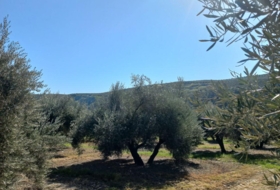


Where to buy land in Jaén
Jaén has the third most expensive average urban land price in Andalusia, with a value of more than €140/m². Only the provinces of Cádiz and Málaga have it higher. In fact, despite being a territory where rustic land properties stand out, it has seen how urban plots increased in value, compared to 2020.
Various municipalities have urban plots for sale in Jaen, with prices higher than the capital of the territory itself. These are: Martos with a value of €298/m², Úbeda with €251/m², Baeza with €245/m², Cazorla with €240/m², Linares with €238/m², or Mancha Real with €235/m². On the other hand, there are also towns with a lower value, such as Andújar, with €144/m², La Guardia de Jaén with plots from €100/m². or Úbeda with €145/m². The cheapest plot is in Baeza for €88m². The situation of developable land is like the urban surface, concentrating on the large and main cities of the place.
As for the average price of rustic properties, it stands at €28,000 per hectare, which is €2.80/m², making it the second most expensive province in the entire Andalusian community, after Almería. The cheapest undeveloped land for sale in Jaén is in the towns of Úbeda and Navas de San Juan at €1/m², Arroyo del Ojanco at €1.2/m² and Ventas del Carrizal at €1.8/m².
The disposition of the population
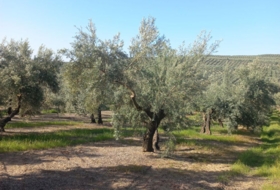
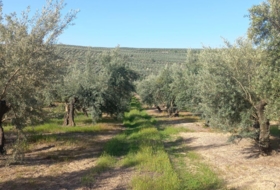
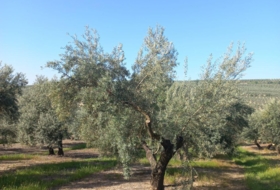
The province of Jaén, located in the northeast of Andalusia, is a land of olive groves. It has an area of 13,496.09 km² and is located between the source of the Guadalquivir River, Sierra Morena, and the Cordillera Bética.
In the region, there is a more urban area (in the centre-west) and a more rural one (in the mountains). Most of the population is in the west and the capital. The most industrialized area in the western half and there is a large amount of industrial land spread over various industrial estates at competitive prices.
Andalusians from Jaén, haughty olive growers
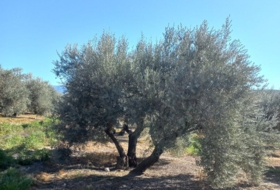
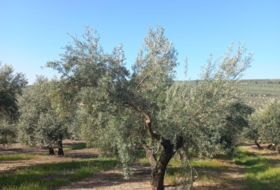
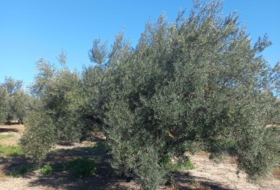
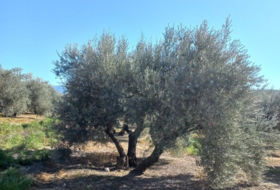
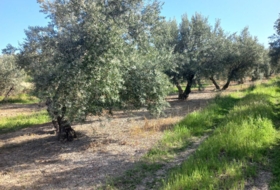
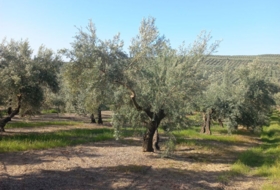
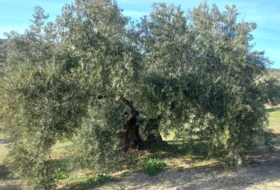
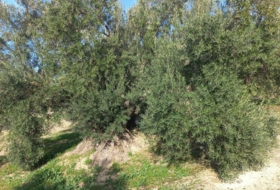
The agricultural sector is focused on olive cultivation (this province contributes 20% of the olive oil production in the world and 50% in Spain). This is in line with the rest of the activities, especially in the rural world and linked to the food industry, both olive oil and other products.
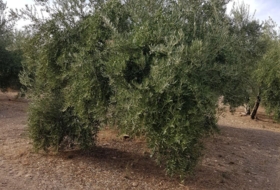
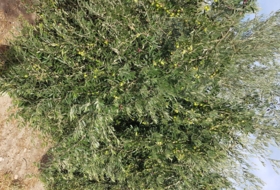
The olive groves occupy more than 550,000 hectares of the territory and its predominant variety is the picture. Among its appellations of origin, we find: DO Sierra de Segura, DO Sierra de Cazorla and DO Sierra Mágina.
It is also committed to other rainfed options such as the cultivation of pistachios, almond trees (almost 3,000 hectares), cereals (durum wheat, cotton, barley and corn), sunflowers, legumes, forage crops and vineyards (with 440 cultivated hectares).; the latter constitutes three Geographical Indications: Wine from the Land of Bailén, Wine from the Land of Sierra Sur and Wine from the Land of Torreperogil.
While irrigated are industrial and horticultural crops (strawberries, asparagus, garlic, tomatoes, onions, or stevia). In fruit trees, the cherry stands out, with the largest extension of dedicated land in the province.
The largest extension of protected land in Spain
Jaén is the province with the largest protected forest and agricultural area in the country. Its natural surface reaches 300,000 hectares.
The orography of the province is marked by its mountains such as Sierra Morena (where black, black and Aleppo pine forests predominate) and the depression of the Guadalquivir, its basin forms a relief of hills on which olive groves extend.
The predominant climate is the continental Mediterranean, influenced by the atmospheric circulation of the Guadalquivir Valley open to the Atlantic Ocean. The maximum average temperature is 22ºC and the minimum is 11º. Winters are mild and summers hot and dry. Between autumn and spring rainfall occurs due to humid oceanic winds, especially in the mountains.
Its forests provide excellent quality of environmental life, in addition to hosting extensive hunting reserves, being home to a diverse fauna or the pastures of transhumant livestock, it also provides the raw material for the furniture industry and is the destination of many tourists whom They seek to connect with nature.
Hunting activity: wealth and nature
The territory full of natural parks and its great variety of game species make this place a paradise for hunters, both national and international.
The province of Jaén stands out in the field of hunting, it is one of the provinces with the largest number of hectares for this practice. In addition, it has many hunting reserves (more than 800) that are expanded every year and that occupy more than 1,200,000 hectares, most of them the small game (more than 600).
Hunting generates large amounts of income in Jaén (around 200 million euros a year), helps prevent depopulation and the conservation of the natural environment since it contributes to regulating the population density of some species.
In big game hunting, species such as deer, wild boar, fallow deer, roe deer, mouflon or mountain goat stand out. While in the minor, the thrush, the partridge, the rabbit, and the hare, among others, predominate.
Transhumance and respectful livestock with the environment
Extensive transhumance and ecological livestock farming is practised in Jaén, taking advantage of, and respecting the richness of its natural spaces, which maintains its cultural, ethnographic and economic heritage.
Their livestock is pigs, goats, sheep, and cattle. It is intended for both meat and dairy production.
It has a great variety of native breeds in danger of extinction and is at the forefront of the conservation of its genetic heritage. Among them we find in the bovine area the Berrenda en Negro and in Colorao, the Pajuna, the Cárdena and the Negra Andaluza. In sheep the Montesina and the Segureño lamb and in goats the Blanca Andaluza, the Negra Serrana and the Blanca Celtiberica.
This activity generates high-quality, ecological products with a protected geographical indication. It is also an incentive for tourist attractions.
The engine of the Andalusian industry
The province of Jaen is one of the most industrialized in Andalusia. Despite this, it is currently in a difficult situation due to the recent economic crisis. The fabric of the extractive industry contributes less than 10% to the provincial GDP and manufacturing little more than 10% of the Andalusian region.
Intending to improve this reality, the province has been expanding the offer of industrial land to encourage the establishment of companies in the area that provide economic development and employment.
In the industrial sector, small and low-tech companies prevail, although many auxiliary micro-enterprises have also been created with specialized productions such as agri-food or wooden furniture.
The industry dedicated to the production of beverages, food and tobacco stands out, followed by metallurgy, automobiles, transport equipment, minerals and non-metallic products, structural ceramics, wood, and cork products, as well as textiles.
The Janense trade
The services sector is growing (administrations, commerce, and tourism) and is led by technology. As for trade, the export of capital goods and electrical appliances, plastic products, agri-food or textiles, among others, stands out.
The natural wealth of the province favours forestry and agricultural development, which have become the most prominent fields in the region and place it on the world map, especially for olive oil. The value of your land is relatively accessible when investing, whether urban, industrial or agricultural.